· by Michael Blair, Nashville's Air Duct Cleaning
Duct cleaning is marketed hard and is genuinely useful in a defined set of circumstances. Being honest about which those are is more useful than either dismissing it or selling it on a schedule.
When is duct cleaning justified?
The EPA’s guide to having your air ducts cleaned names three cases: substantial mold growth you can see inside hard-surface ducts or on other parts of the heating and cooling system, ducts infested with rodents or insects, and ducts so clogged with dust and debris that particles come out of the supply registers. Renovation earns a place when the system kept running, or the registers stayed open, through dusty work and the debris got into the ducts. If the work has not started yet, EPA’s advice is cheaper: seal the supply and return registers and leave the system off until the dust is cleaned up. Our post on duct cleaning after a renovation goes through that job in detail.
Water in the ductwork is its own case. EPA’s brief guide to mold and moisture says water-damaged areas need drying within 24 to 48 hours to keep mold from growing, and the duct guide says insulated duct that gets wet or moldy cannot be cleaned effectively and should be removed and replaced. So after a leak or a wet crawl space, soaked lined or flex duct is usually a replacement, and whatever let the water in gets fixed before anything else, or the problem returns.
When is duct cleaning not worth it?
On a fixed schedule with no symptom. EPA does not recommend cleaning ducts routinely, only when there is a reason, and it notes that duct cleaning has never been shown to prevent health problems. Where nobody in the house has allergies or unexplained symptoms and a look inside the ducts shows no heavy dust, no musty odor and no visible mold, the same guide calls cleaning probably unnecessary. A dusty return grille on its own means little, because that is where the house air gets pulled in.
It also will not fix an allergy problem that starts somewhere else. EPA’s page on biological contaminants and indoor air lists mold, dust mites, pollen, pet allergens, mice and cockroaches as triggers for allergic reactions, and it recommends keeping indoor relative humidity below 60 percent, ideally between 30 and 50. The duct guide adds that pollutants from outdoors and from cooking, cleaning or simply moving around the house can expose you to more than dirty ducts do. Humidity, a filter that air slips around, and that everyday dust often matter more than whatever is lying in the ductwork.
- Substantial visible mold inside the ducts
- Rodent or insect infestation
- Ducts clogged with debris, or dust blowing out of the registers
- Renovation dust that reached a running system
- After water entering the ductwork, where soaked lined duct is replaced
- Not simply because it has been a few years
What it will not fix
Duct leakage, for a start. ENERGY STAR’s page on duct sealing puts the air lost to leaks, holes and poorly connected ducts in a typical house at about 20 to 30 percent of what moves through the system, and the Department of Energy’s home upgrades guide gives the same range. Cleaning does nothing about that, as our post on leaky ducts explains. Nor does it fix poor filtration from a filter that does not seal in its track, which is why EPA tells homeowners to check that no filter is missing and that air cannot bypass one through gaps around the holder. Nor humidity: EPA calls controlling moisture the most effective way to prevent biological growth in air ducts.
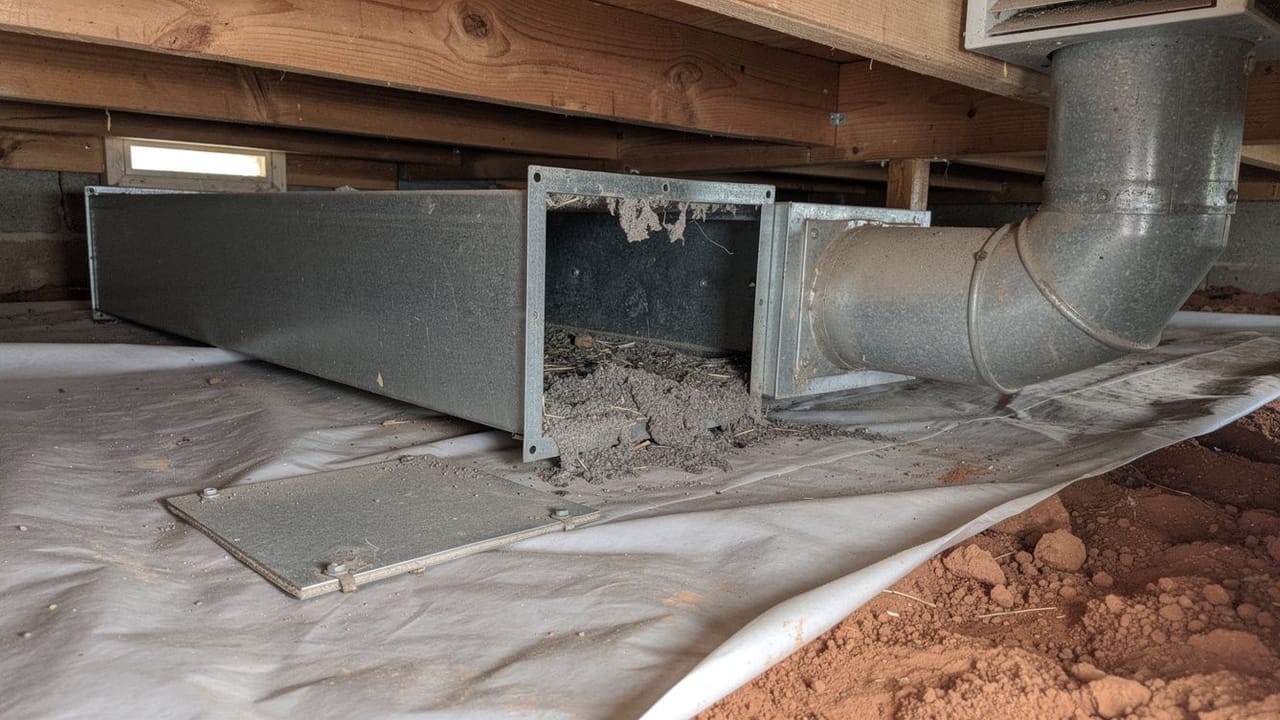
For ducts that run through a crawl space, sealing and insulating them is usually the better first investment for energy and for moisture. ENERGY STAR recommends sealing leaks with mastic or metal tape, never duct tape, and insulating every duct you can reach in attics, crawl spaces, unfinished basements and garages. EPA makes the moisture case, saying sealed and insulated ducts in spaces that are not air-conditioned help keep condensation out of the system.
Judging a quote
EPA puts the typical cost at $450 to $1,000 per heating and cooling system, though not always, depending on the size of the system, how accessible it is, the climate and how contaminated it is, and it suggests written estimates from at least three companies before deciding. A price well under that range is worth asking about: what equipment is used, and whether every component of the system is cleaned, the main trunk lines and plenums included, or only the branch runs. EPA’s own checklist asks whether the provider reached the entire system and showed the ductwork and plenums were clean, and what to ask a duct cleaning company has the rest of our questions.
In EPA’s description, a service provider uses specialized tools to dislodge the dirt and then pulls it out with a high-powered vacuum, brushing the duct surfaces in a controlled way alongside contact vacuuming, with equipment that exhausts outdoors or runs through HEPA filtration. The guide warns that an inadequate vacuum collection system can release more dust than leaving the ducts alone, so a shop vacuum at the register is not the same job. We run the system under negative pressure and agitate each branch, which is how our air duct cleaning service is done, and if one of the situations above fits your house you can ask us for a free estimate.
Sources
- U.S. EPA, Should You Have the Air Ducts in Your Home Cleaned? — When cleaning is warranted (mold, vermin, clogged ducts); not routinely; never shown to prevent health problems; wet insulated duct replaced; renovation dust; filter bypass; moisture control; $450 to $1,000 per system and three written estimates; tools, high-powered vacuum, HEPA or outdoor exhaust; inadequate vacuum releases more dust
- U.S. EPA, A Brief Guide to Mold, Moisture and Your Home — Dry water-damaged areas within 24 to 48 hours to prevent mold
- U.S. EPA, Biological Contaminants and Indoor Air Quality — Allergy triggers (mold, dust mites, pollen, pet allergens, pests); indoor humidity below 60 percent, ideally 30 to 50
- ENERGY STAR, Duct Sealing — About 20 to 30 percent of air lost to leaks; seal with mastic or metal tape, never duct tape; insulate ducts in crawl spaces and attics
- U.S. Department of Energy, Home Upgrades — About 20 to 30 percent of duct air lost to leaks, holes and poor connections
FAQ
When Duct Cleaning Is Actually Justified — questions
Should I get my ducts cleaned every few years?
Not on a schedule alone. EPA does not recommend routine duct cleaning, only cleaning as needed, and with clean filters, no musty odor and nothing blowing out of the supply registers it is probably unnecessary. It is justified for substantial visible mold, rodents or insects in the ducts, heavy debris, renovation dust that reached a running system, or after water has entered the ductwork.
Will duct cleaning help my allergies?
EPA says duct cleaning has never been shown to prevent health problems. It is warranted when there is mold, vermin or heavy debris in the ducts. Common triggers it does not touch include indoor humidity, a filter that air can bypass, and pollen and other pollutants that come in from outside or from everyday life in the house. Keeping humidity below 60 percent and fixing the filter fit are better first steps.
What does proper duct cleaning involve?
Specialized tools to dislodge the dirt, then a high-powered vacuum collection system to draw it out, with controlled brushing done alongside contact vacuuming so debris is captured rather than spread into the house. The vacuum should exhaust outdoors or through HEPA filtration. Every component should be covered, the trunk lines and plenums as well as the branches. A shop vacuum at the register grille is not the same job.
Why is duct cleaning so expensive?
The price follows the size of the system, how easy it is to reach, the climate and how contaminated it is, and the EPA puts a typical job at $450 to $1,000 per system. A quote far below that is worth asking about, starting with the equipment and whether the trunk lines and plenums are included.