
· by Michael Blair, Nashville's Air Duct Cleaning
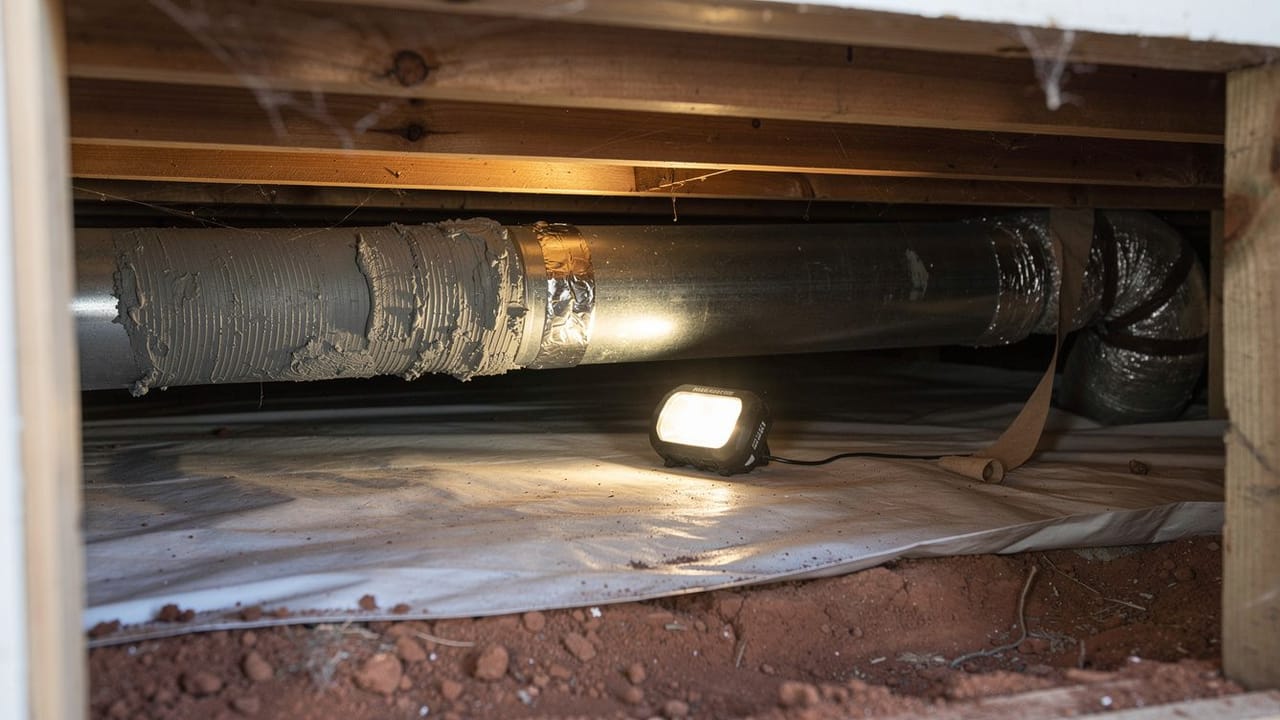
Ducts are often tucked into walls, ceilings, attics, basements and crawl spaces, as the ENERGY STAR duct sealing flyer notes, and the attic and the crawl space are unconditioned space. Any air escaping there is air you paid to heat or cool, delivered somewhere you are not trying to condition. ENERGY STAR’s duct sealing guide puts the loss in a typical house at about 20 to 30 percent of the air moving through the ducts, gone through leaks, holes and poorly connected runs.
Where do ducts leak?
At joints and connections, at the plenum, at the boots where a duct meets a register, and wherever flexible duct has come loose or torn. The ENERGY STAR flyer lists leaky, torn and disconnected ducts and poorly sealed registers and grilles among the usual faults, and the guide calls the connections at vents and registers a common place to find leaks. On older runs sealed with cloth duct tape, we look at the tape first, because the Department of Energy’s page on tight duct sealing says it can dry out and fail quickly.
The name is misleading. ENERGY STAR says never to use duct tape on ducts, since it is not long-lasting.
What does duct sealing involve?
Mastic, a paste brushed over joints and connections, or a foil tape rated for the job. The Building America checklist for duct sealing and insulation calls for UL-approved mastic or UL 181 tape on every leak, connection and plenum, and the DOE page on tight sealing adds that a seam wider than an eighth of an inch gets fiberglass mesh tape first, with the mastic over it. A crawl space is an unpleasant place to do any of that, which is one reason the job gets put off.
Aerosol sealing from inside the ducts exists too, and the ENERGY STAR flyer names an aerosol-based sealant alongside mastic and metal tape. Testing is how you know any of it worked. Under Tennessee’s rule adopting the 2018 energy code, the code’s duct testing and duct leakage sections are optional, so a newer house in the state is not guaranteed to have had its ducts measured. Where the ducts also need cleaning, our air duct cleaning service belongs after the sealing, so the system is not pulling crawl space dust straight back in.
- Mastic or UL 181 foil tape, never cloth duct tape
- Seal register boots to the floor, wall or ceiling
- Insulate ducts in unconditioned space after sealing
- A duct leakage test measures what is left
- Return leaks pull crawl space air into the house
Return leaks add an air problem
A leak on the supply side loses conditioned air. A leak on the return side pulls air in from wherever the duct runs, and the Building America checklist warns that leaky returns in unconditioned spaces can draw in hot and cold air, with dust, pollen and soil gases riding along.
In a humid climate, the Department of Energy’s write-up on unvented crawl spaces notes, outside air is often damper than the air already under the house, and it ties vented crawl spaces to mold, pest and structural trouble. A return leak down there draws that damp, sometimes musty air into the system and out into every room, which the ENERGY STAR flyer flags as pollutants from musty crawl spaces circulating through the home. It is an air quality issue as well as an energy one, and the dust it carries is the subject of our post on why dust keeps coming back after duct cleaning.
Insulating after sealing
A sealed duct running through a hot summer attic still picks up heat through its walls, and in winter it gives heat away the same way. Insulation on the duct addresses that, and it should follow sealing rather than replace it, which is the order ENERGY STAR lays out. The DOE page on high-R duct insulation says ENERGY STAR requires at least R-8 on ducts in unconditioned spaces, and the Building America checklist asks for R-8 on supply ducts and R-6 on returns.
According to the ENERGY STAR flyer, leaky ducts can cut heating and cooling efficiency by as much as 20 percent, and sealing and insulating them can often pay for itself in energy savings. In a house with gas appliances, the flyer also calls for a combustion safety test once the ducts are sealed. If you would like the ducts under your floor or over your ceiling looked at, ask us for a free estimate.
Sources
- ENERGY STAR, Duct Sealing — Ducts often hidden in attics, crawl spaces, basements and walls; about 20 to 30 percent of duct air lost in a typical house; never use duct tape; connections at vents and registers are common leak spots; homeowner sealing with mastic or metal tape
- ENERGY STAR, Duct Sealing flyer (PDF) — Leaky, torn and disconnected ducts and poorly sealed registers; aerosol-based sealant; seal then insulate; musty crawl space pollutants; up to 20 percent efficiency loss; can often pay for itself; combustion safety test after sealing
- U.S. DOE Building Science Education Solution Center, More About Tight Duct Sealing — Cloth-backed duct tape can dry out and fail quickly; fiberglass mesh tape under mastic on seams wider than 1/8 inch
- U.S. DOE Building America Solution Center (PNNL), Duct Sealing and Insulation checklist — UL-approved mastic or UL 181 tape on leaks, connections and plenums; leaky returns in unconditioned spaces draw in hot and cold air, dust, pollen and soil gases; R-8 supply and R-6 return insulation
- Tenn. Comp. R. & Regs. 0780-02-23-.02, Adoption by Reference (Cornell LII copy) — Tennessee’s adoption of the 2018 IECC makes duct testing (R403.3.3) and duct leakage (R403.3.4) optional
- U.S. DOE Building Science Education Solution Center, HVAC: High-R Duct Insulation — ENERGY STAR requires at least R-8 duct insulation in unconditioned spaces
- U.S. DOE EERE, Unvented, Conditioned Crawlspaces: Building America Top Innovation (2014) — In humid climates outside air is often moister than crawl space air; vented crawl spaces linked to mold, pest and structural problems
FAQ
Leaky Ducts Cost More Than Dirty Ones — questions
How much air do leaky ducts lose?
It varies by house. ENERGY STAR puts the typical loss at about 20 to 30 percent of the air moving through the ducts, and says leaky ducts can cut heating and cooling efficiency by as much as 20 percent. It also says sealing and insulating the ducts can often pay for itself in energy savings.
Can I seal ducts myself?
The joints you can reach in a crawl space or attic, yes. ENERGY STAR describes duct sealing as a job some homeowners take on themselves, using mastic or metal tape on the leaks they can get to and then insulating the ducts they can reach. What you cannot easily judge is how much leakage is left in the runs you cannot see, and a duct leakage test measures that. Never use cloth duct tape, which dries out and fails, and if the house has gas appliances, have a combustion safety test done after sealing.
How is a return leak different from a supply leak?
A supply leak loses air you paid to condition. A return leak pulls in air from wherever the duct runs, so a return in an attic or crawl space can draw in hot or cold air along with dust, pollen and soil gases and send it through the house. In a damp crawl space that can mean musty air in every room, which makes it an air quality problem as well as an efficiency one.
Is duct sealing worth it?
Often, yes. ENERGY STAR says leaky ducts can lower heating and cooling efficiency by as much as 20 percent, and that sealing and insulating them often pays for itself through lower energy use. Sealing a return that runs through a damp crawl space also stops it pulling musty, dusty air into the rooms.