· by Michael Blair, Nashville's Air Duct Cleaning
A low per-vent price on a mailer says almost nothing about what the bill will be once a crew is inside the house. The Tennessee Department of Commerce and Insurance’s warning about air conditioning repair scams tells homeowners to beware of ads quoting prices that seem too cheap to be true, and that caution carries straight over to duct cleaning. It is also worth knowing that EPA’s guide to having your home’s air ducts cleaned recommends cleaning only as needed and never as routine maintenance, a question our post on when duct cleaning is justified sorts out. If you have decided it is, a few questions before booking settle what you are actually paying for.
What equipment should a duct cleaner use?
The same EPA guide describes the method a homeowner should expect: vacuum equipment that exhausts outside the house, or HEPA-filtered equipment if it exhausts inside, working together with controlled brushing that knocks dust loose from the duct walls. On fiberglass duct board and lined ducts it calls for soft-bristled brushes only, and it rules out steam or any other wet method on ductwork. How we set up a house is on our air duct cleaning page.
Ask what equipment is used and whether the trunk lines and the air handler are included, or only the branch runs. EPA’s own after-the-job checklist asks whether the company reached the entire system, coils, drain pans, fans and humidifiers included, so a quote limited to the branches leaves a good part of it untouched.
What is in the price
How many vents are included and what an additional one costs. Whether the return ducts, the plenum, the blower and the coil are included, or priced separately as coil and blower cleaning.
Get the total in writing before the appointment, and be explicit that you are not agreeing to on-site additions without a written price. EPA’s advice is to get written estimates from at least three companies and a written agreement on the total cost and scope before any work starts. Be wary of anyone who says they are EPA certified, since EPA neither sets duct cleaning standards nor certifies companies. If you are billed for work you never agreed to, the Tennessee Attorney General’s Division of Consumer Affairs takes complaints from consumers in the state.
- Vacuum that exhausts outdoors or through a HEPA filter, with brushing
- Trunk lines, plenum and air handler included or extra
- Number of vents included and cost per extra
- Written total before the visit
- Decline chemical treatments and sanitizers by default
Sanitizers and sealants
Chemical sanitizers and duct sealants sprayed inside ducts are something a provider may propose, and EPA says little research shows most biocides or ozone work when used inside ducts. It also points out that no product is registered as a biocide for fiberglass duct board or fiberglass-lined ducts, so ask what the ducts are made of and ask to see the label. Sealants get a firmer answer: neither EPA nor the duct cleaning, insulation and sheet metal trade groups recommend them for routine use, and the agency’s checklist says to allow one only in unusual cases where nothing else is feasible.
If there is genuine mold, the answer is fixing the moisture and removing the growth. EPA’s brief guide to mold, moisture and your home is plain that killing mold is not enough, it has to be removed. Wet or visibly moldy insulation and lining gets replaced, and EPA allows a registered biocide only on bare sheet metal after cleaning, used as its label directs. Our post on how to tell if an HVAC system has mold goes through the signs.
Should you ask for before and after photos?
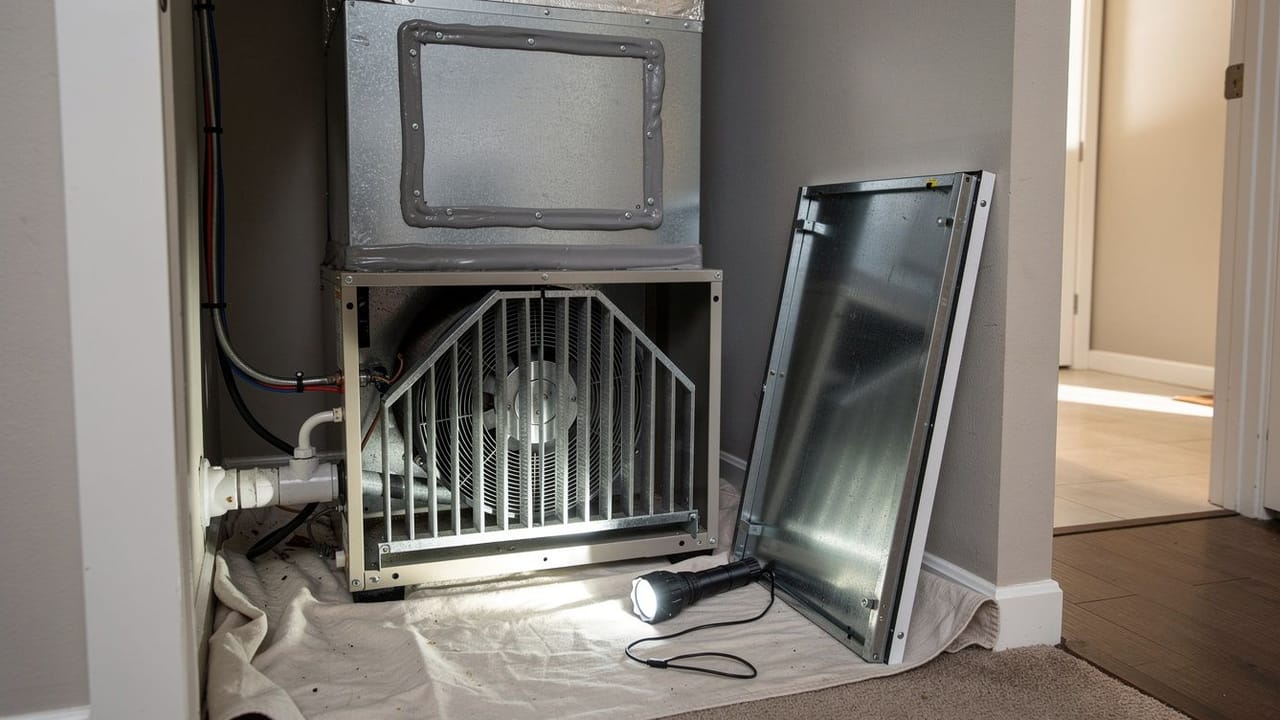
Ask for before and after photographs from inside the ducts. EPA notes that some companies use remote cameras to record conditions inside the ducts, and it calls a thorough visual inspection the best way to judge the result, which includes your own look once the crew is done. Shine a flashlight into the cooling coil and light should come through the other side if it is clean; the blower compartment should be free of visible dust, and any new access door in sheet metal should be fastened with screws, rivets or mastic instead of duct tape alone.
Photos also help when a crew reports mold found on site and proposes a much larger job. EPA says to ask them to show you the mold, and that only an expert, sometimes with a lab test, can confirm a growth is mold; a strip of clear tape pressed on it and mailed to a microbiology lab is one way to check before you agree. If you would like a written scope from us before deciding, ask for a free estimate.
Sources
- US EPA, Should You Have the Air Ducts in Your Home Cleaned? — Cleaning only as needed; vacuum exhausting outside or HEPA with controlled brushing; soft brushes on duct board; no steam; whole-system scope; three written estimates and a written agreement; EPA certifies no one; little research on biocides; none registered for fiberglass duct board; sealants not recommended for routine use; moldy insulation replaced; visual inspection the best check; post-cleaning checklist; ask to be shown mold
- US EPA, A Brief Guide to Mold, Moisture and Your Home — Killing mold is not enough; it must be removed, and the moisture fixed
- Tennessee Department of Commerce and Insurance, Don’t Let Air Conditioning Repair Scams Leave You Hot (2018) — Beware of ads with prices that seem too cheap; ask for written estimates
- Tennessee Attorney General, Division of Consumer Affairs, File a Consumer Complaint — Where Tennessee consumers file a complaint against a company
FAQ
What to Ask a Duct Cleaning Company — questions
Why are some duct cleaning prices so low?
A per-vent price means little until the scope is in writing: how many vents, whether the trunk lines, returns, plenum, coil and blower are covered, and whether any chemical treatment is being added. Tennessee consumer regulators advise caution with advertised prices that look too cheap and recommend written estimates. Get a written total covering the whole system and state that you will not agree to additions without a written price.
Should I let them apply a sanitizer to the ducts?
By default, no. EPA advises against chemical biocides or treatments unless you fully understand the pros and cons, says little research supports most biocides used inside ducts, and notes that none is registered for fiberglass duct board or lined ducts. Genuine mold needs the moisture problem fixed and the growth removed, with wet or moldy insulation replaced.
How do I know they actually cleaned anything?
Ask for before and after photographs from inside the ducts, then look for yourself. EPA calls a thorough visual inspection the best check: both sides of the cooling coil visibly clean, light passing through the coil when you shine a flashlight into it, and a blower compartment free of dust. If the crew says they found mold, ask them to show it to you before agreeing to a larger job.
Is duct cleaning a scam?
Not in itself, but some offers are built to grow once the crew is inside. Tennessee’s Department of Commerce and Insurance warns about ads with prices that seem too cheap to be true, and the EPA warns against claims of EPA certification. Get a written total for the whole system and agree to no add-ons without a written price.