· by Michael Blair, Nashville's Air Duct Cleaning
Most of the time, the case for cleaning residential ductwork is weak. The EPA’s guide to air duct cleaning recommends it only on an as-needed basis and says duct cleaning has never been shown to actually prevent health problems. A leaky system is a different matter: ENERGY STAR’s page on duct sealing says that in a typical house about 20 to 30 percent of the air moving through the ducts is lost to leaks, holes and poorly connected ducts, which is the subject of our post on why leaky ducts cost more than dirty ones. A renovation is where the cleaning question changes. The EPA’s Indoor airPLUS bulletin on duct protection during construction says sawing, sanding and installing drywall generate large amounts of dust, and that the dust can be drawn into the ducts and the equipment even when the system is not running. Running the system during that work, or leaving the registers open, only gives it more ways in. A newly built house can be in the same state on move-in day if its ducts sat open while the trades worked.
How does construction dust get into the ducts?
Return grilles pull air from the rooms, and during a renovation that air carries drywall dust. The Indoor airPLUS bulletin is specific about what a filter does with it: a fiberglass filter keeps large debris out of the equipment but does not stop fine dust from reaching the mechanical components or the ducts. That is why the return side, the blower compartment and the evaporator coil are where we look first. Supply registers left uncovered on a floor being sanded take in sawdust from above, and the bulletin lists sawdust, scraps of material, carpet fibers, nails, screws and construction trash among what finds its way into open floor ducts and register boots. It also singles out flex duct, whose grooved inner surface is especially prone to holding dust picked up during construction.
Once it is inside, the bulletin says, construction dust and debris can block airflow through the ducts, cut the efficiency and shorten the life of the equipment, and get blown through the house over time. It can also contribute to microbial growth or odors, so a smell that hangs on after the work is finished is worth tracing back to the system. Dust on the coil is the part that bears on cooling directly, and the EPA notes that cleaning dirty cooling coils, fans and heat exchangers can improve a system’s efficiency.
What to check before hiring anyone
Pull a supply register and look inside with a flashlight. The EPA’s threshold for cleaning is ducts clogged with excessive amounts of dust and debris, or particles actually being released from the supply registers, and it finds no evidence that a light amount of household dust in ducts poses any risk to health. Drywall powder lying in the boot, sawdust in the run or construction debris at the bottom of a floor register is what we look for. We also look at the filter, and one that loads up much faster than it did before the work tells us to open the return side and check it too. Look at the evaporator coil if it is accessible, or ask the HVAC technician to. The EPA’s own checklist asks whether both sides of the cooling coil are visibly clean, and a flashlight pointed into a clean coil should shine through to the other side. A coil furred with drywall dust needs cleaning whatever is decided about the ducts; that is our coil and blower cleaning work, and it can be done with a duct job or on its own.
If the registers are clean and the filter is lasting normally, the ducts probably do not need it, whatever the contractor doing the renovation suggests. The EPA reaches the same place: with no sign of large deposits of dust or mold after a look inside, and no one in the household with allergies or unexplained symptoms, duct cleaning is probably unnecessary. Dusty return grilles on their own do not count, since the EPA says it is normal for them to collect dust as air is pulled through.
- Excessive dust or construction debris inside supply ducts: clean them
- Filter loading much faster than before the work: we check the return side too
- Coil coated: coil cleaning, with the ducts or on its own
- Registers clean, filter normal: probably not needed
What a proper cleaning involves
Before anything is opened, the EPA advises checking that the system has no asbestos-containing materials, such as insulation or register boots, and in an older house being renovated we make that check first. We then put the system under negative pressure with a large vacuum connected to the trunk line, so anything loosened is pulled into the collector rather than the house. The EPA’s test for that equipment is plain: it should exhaust outside the home, or be HEPA equipment if it exhausts inside, because an inadequate vacuum collection system can release more dust than leaving the ducts alone would. Each run is brushed from the register end toward the trunk while the vacuum draws, the controlled brushing with contact vacuuming that the EPA describes, with soft-bristled brushes on fiberglass duct board and lined metal duct as it advises. For accessible flex duct full of construction dust, the EPA notes that replacing it can be more economical than cleaning it.
The blower compartment, the return plenum and the supply plenum are included, opened through access ports so the whole system can be cleaned and inspected, and the coil is cleaned along with them. The registers come off and get washed. Every access hole cut in the ductwork is sealed and re-insulated afterward so it is airtight, which the EPA lists among the things a service provider should do. That is the scope of our air duct cleaning.
A company whose vacuum exhausts back into the house without HEPA filtration is not doing this job. One that leads with fogging the ducts with a sanitizer deserves questions, because the EPA says research has not demonstrated the effectiveness of chemical biocides and sealants in duct cleaning, and that they should be applied, if at all, only after the system has been properly cleaned. Ask about the vacuum, whether they clean the plenums and the blower, and whether they seal the access points. The EPA neither sets duct cleaning standards nor certifies companies, and it warns against duct cleaners who claim to be certified by EPA; what it suggests asking is whether the company complies with the standards of NADCA, the duct cleaning trade association. The rest of the questions are in our post on what to ask a duct cleaning company.
How do you keep renovation dust out of the ducts?
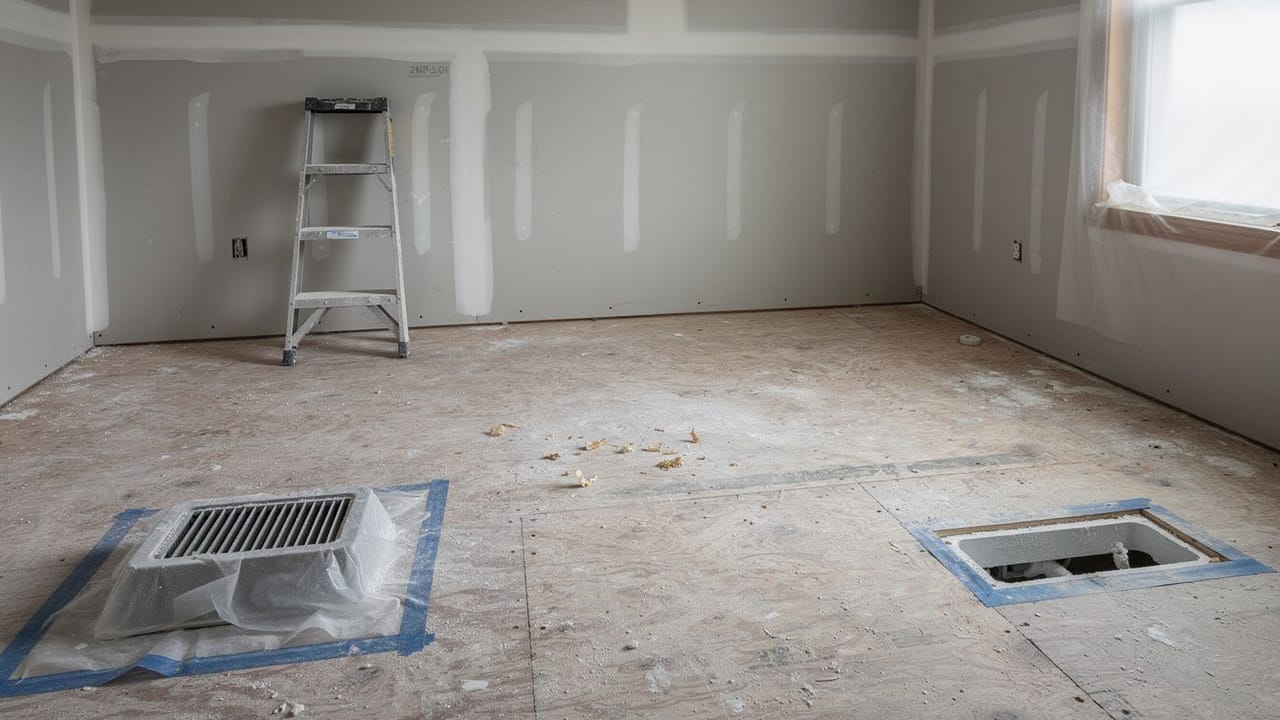
On the next renovation, cover every register and return before the dust starts. The EPA’s guide says to seal off supply and return registers during construction or renovation work that produces dust, and not to operate the heating and cooling system until the dust is cleaned up. The Indoor airPLUS bulletin suggests a commercial duct cover or clear plastic wrap held with painter’s tape, with the covers on floor openings clearly marked so nobody trips on them. If the house needs heating or cooling while the work goes on, run it only in the hours when nobody is sawing or sanding, with the registers in the work area still sealed. The bulletin calls it critical not to run the system during work that puts dust in the air, and a fiberglass filter will not catch the fine dust. Having the crew vacuum each area as its work is finished is another of its steps.
On a new build, ask the builder when the registers were installed and whether the ducts were covered; the answer tells you whether to look inside them before moving in. The bulletin’s advice to builders is to seal the ends of every installed duct, register boots and intakes included, until the flooring, cabinetry and finish carpentry are done, and to have the HVAC contractor write a duct and equipment protection plan.
After the cleaning, put in a new filter. The bulletin’s closing step for a construction job is to clean the ducts and replace the filters, and we look at the new filter again once the system has run for a while, because it shows whether dust is still coming through. If you have just finished a remodel or are about to move into a new house, ask us for a free estimate and we will look inside before recommending anything.
Sources
- U.S. EPA, Should You Have the Air Ducts in Your Home Cleaned? (EPA 402-K-97-002) — Clean only as needed; never shown to prevent health problems; threshold of excessive dust and debris; light dust poses no known risk; dusty return grilles are normal; cleaning coils can improve efficiency; asbestos check; vacuum exhausts outside or HEPA; controlled brushing with contact vacuuming; soft brushes on duct board and lined duct; replacing flex duct can be cheaper; seal and re-insulate access holes; biocide and sealant effectiveness not demonstrated; NADCA standards; wary of claimed EPA certification; seal registers and do not run the system during renovation dust.
- U.S. EPA Indoor airPLUS Technical Bulletin, Duct Protection During Construction (EPA 402/B-20/005, 2019) — Sawing, sanding and drywall make large amounts of dust that enters ducts even with the system off; debris in open floor ducts and register boots; flex duct holds dust; blocked airflow, lost efficiency, odors; do not run the system during dusty work; fiberglass filter does not stop fine dust; seal duct ends with covers or plastic and painter’s tape; protection plan; clean ducts and replace filters after construction.
- ENERGY STAR, Duct Sealing — In a typical house about 20 to 30 percent of the air moving through the duct system is lost to leaks, holes and poorly connected ducts.
FAQ
Duct Cleaning After a Renovation or New Construction — questions
Should I have the ducts cleaned after remodeling?
Look before deciding. Construction dust can get into ducts even with the system off, and running the system or leaving the registers open during sanding and drywall work gives it more ways in. Pull a register and look: drywall dust, sawdust or debris lying in the duct is a reason to clean, while a light film of household dust is not. A filter that loads up much faster than before the work is a reason for us to check the return side as well.
Does a new house need duct cleaning?
It can. If the ducts were installed before the drywall and left uncovered while the trades worked, sawdust, scraps and fine dust can end up in the boots and runs. The EPA’s guidance for builders is to keep duct openings sealed until construction is finished and to clean the ducts and replace the filters at the end. Ask the builder whether the ducts were covered, look inside a few registers before moving in, and have the coil checked if you find debris.
What does a proper duct cleaning include?
A check for asbestos-containing materials first, then a vacuum that exhausts outdoors or through HEPA filtration, controlled brushing of every run while the vacuum draws, the plenums, blower compartment and coil cleaned through access openings, registers removed and washed, and every access hole sealed and re-insulated afterward. Sprayed sanitizers are a separate decision, and the EPA says research has not demonstrated their effectiveness in duct cleaning.
What should I do after a duct cleaning?
Put in a new filter, then look at it again once the system has run for a while. A filter that loads up fast tells you dust is still getting in, often through the return side. Also check that every access hole cut into the ductwork was sealed and re-insulated so it is airtight.