· by Michael Blair, Nashville's Air Duct Cleaning
A musty smell that appears in the first seconds after the air conditioning starts and fades as it runs is a complaint we hear all summer across Middle Tennessee. It is a real signal, and it usually comes from wherever water collects in the system, such as the coil or the drain pan, rather than from the ductwork that gets sold as the solution. The EPA’s guide to having your air ducts cleaned says controlling moisture is the most effective way to prevent biological growth in air ducts, and that is where we start too.
Where does moisture collect in an HVAC system?
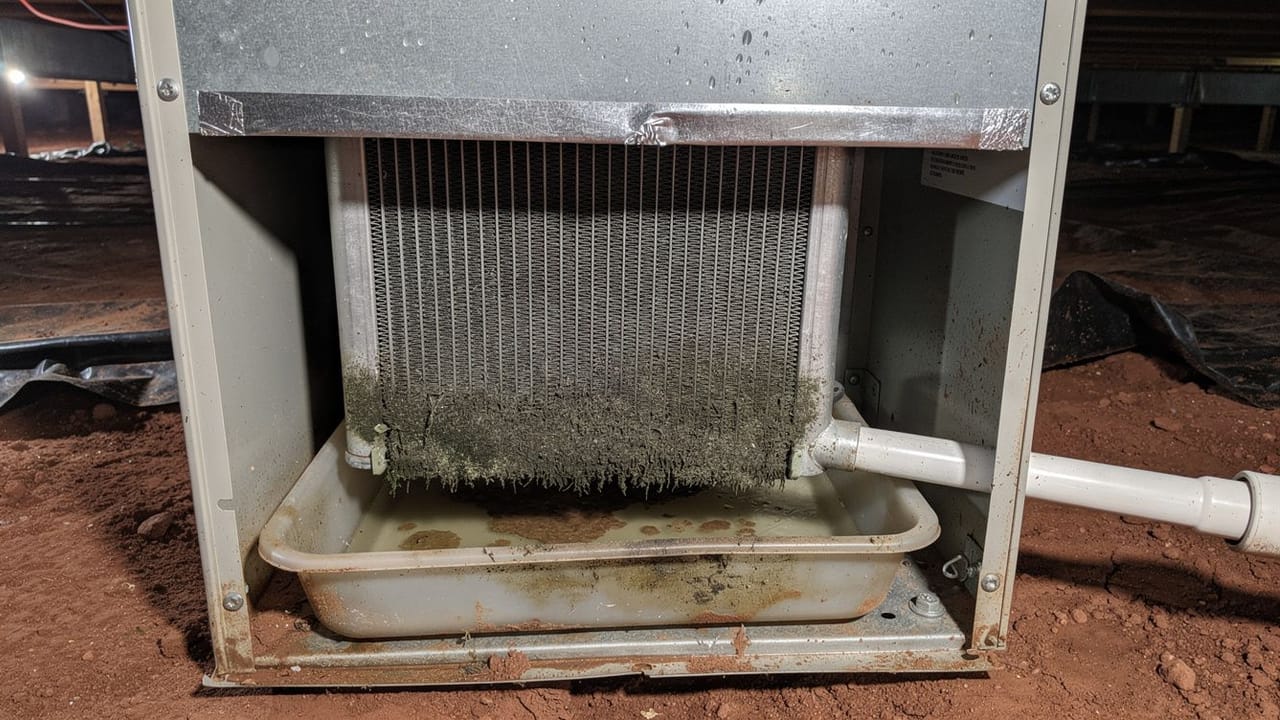
The evaporator coil is wet by design. The same EPA duct guide notes that cooling coils are built to pull water out of the air, and the Department of Energy’s Building America guide to right-sizing points out that in most homes the central cooling system is the only thing dehumidifying the house. That water drips into a pan under the coil and leaves through a condensate line.
So the coil, the drain pan and the cabinet around them are usually the wettest parts of the system, and the usual place mold gets a start. The EPA’s mold remediation guide lists condensate drain pans inside air handling units among the places mold hides. Ducts are normally dry, but not always: EPA says moisture should not be present in them, and condensation or high humidity inside a duct is a sign that mold may be growing there as well. Porous liners inside ductwork are on that same list of hiding places.
What does the timing of the smell tell you?
A smell that is strongest at startup and fades within a minute or two usually sends us straight to the coil. The trade calls it dirty sock syndrome. That is a rule of thumb from the field rather than a lab finding, and we treat it as a reason to open the cabinet, not as a diagnosis.
A smell that lasts the whole run and builds over time sends us to the drain pan and the condensate line. The EPA’s brief guide to mold, moisture and your home asks homeowners to keep drip pans clean and drain lines flowing, and the duct guide adds that pans should slope toward the drain so water does not stand under the coil. When the air handler sits in a crawl space or attic, we also look at whether damp air from that space is finding its way in. The list below is where we look first, and our post on the parts of a system beyond the ducts walks through each of them.
- Strong at startup, then fading: start at the evaporator coil
- Constant while running: check the drain pan and condensate line
- Worse after heavy rain: look at the cabinet and return in a wet crawl space
- Water around the air handler: check for a blocked condensate line
- Visible growth on ducts near the coil: clean the coil first, then judge the duct
The Middle Tennessee reason it is so common
Plenty of the systems we open up here sit in a vented crawl space or an unconditioned attic. The DOE’s write-up on unvented, conditioned crawlspaces explains that in humid climates the outside air is often wetter than the air already in a vented crawlspace, which can lead to structural, mold and pest problems, and that sealing and conditioning those crawlspaces cut humidity by more than 20 percent in Building America work. With the equipment and the return duct sitting in that damp air, we check both for gaps while we are down there.
Oversized equipment makes it worse. EPA warns that a unit that is too big cycles on and off frequently and removes moisture poorly, particularly where humidity is high, and the DOE right-sizing guide makes the same point: unless the system is running, humidity in the home goes unchecked. The house ends up more humid than a correctly sized system would leave it.
What actually fixes it
Cleaning the coil properly, which for us means opening the cabinet to reach it rather than spraying something into a vent, along with clearing the condensate line and cleaning or replacing the drain pan. On a badly fouled coil this is a real service task, not an add-on, and it is the work our coil and blower cleaning covers.
Then the cause. EPA is blunt that if the conditions that caused the mold are not corrected, it will grow back, so we fix a condensate line that does not drain, close gaps in the return, and deal with humidity in the space the equipment sits in. Its mold guide suggests keeping indoor humidity below 60 percent, ideally between 30 and 50. Ultraviolet lamps aimed at the coil come after that, if at all: the EPA’s page on UV lamps and mold says properly designed units may destroy some mold on coils and drain pans, but typical home units have limited effectiveness, and dead spores can still cause allergic reactions. If your system smells every time it kicks on, ask us for a free estimate and we will open it up.
Sources
- US EPA, Should You Have the Air Ducts in Your Home Cleaned? — Moisture control prevents growth in ducts; cooling coils remove water; no moisture in ducts; drain pans slope to the drain; oversized units remove moisture poorly; mold recurs if the cause is not corrected; when cleaning is warranted; never shown to prevent health problems
- US EPA, A Brief Guide to Mold, Moisture, and Your Home — Keep drip pans clean and drain lines flowing; humidity below 60 percent, ideally 30 to 50; do not run a contaminated system; sampling usually unnecessary; moisture control is the key
- US EPA, Mold Remediation in Schools and Commercial Buildings Guide, Chapter 3 — Condensate drain pans and porous duct liners among hidden mold sites
- US DOE Building America, Why Right-Size? Science versus Practicality (2009) — Central cooling is usually the sole source of dehumidification; humidity goes unchecked unless the system runs
- US DOE, Unvented, Conditioned Crawlspaces: Building America Top Innovation (2014) — Outside air wetter than vented crawlspace air in humid climates; mold and structural problems; humidity cut by more than 20 percent
- US EPA, Does Ultraviolet (UV) Radiation/UV Lamps Kill Mold? — Properly designed UVGI may destroy some mold on HVAC surfaces; typical home units limited; much higher exposure needed; dead spores still allergenic
- US EPA, Mold and Health — Mold can trigger asthma episodes and allergic reactions in sensitive individuals (named in the FAQ)
FAQ
Mold in an HVAC System and How to Tell — questions
Will duct cleaning get rid of a musty smell?
Usually not, because the smell generally starts where water collects, at the evaporator coil and drain pan. The EPA suggests duct cleaning when ducts are infested with rodents or insects, clogged with dust and debris, or carry substantial visible mold inside sheet metal ducts, and it notes that duct cleaning has never been shown to prevent health problems. For an air conditioning odor, ask whether the coil will be opened up and cleaned.
Is mold in an HVAC system a health risk?
It can be for some people. The EPA says mold can trigger asthma episodes in sensitive people with asthma and cause allergic reactions in sensitive individuals, and it advises against running a system you know or suspect is contaminated, since that can spread it through the house. Finding and fixing the moisture matters more than testing the spores: the EPA says sampling is usually unnecessary when mold is visible, and that the key to mold control is moisture control.
Do UV lights in an HVAC system work?
Somewhat, on the coil. According to the EPA, a properly designed lamp may destroy some mold on coil and drain pan surfaces, but typical home units have limited effectiveness, and killing most mold spores usually takes much higher UV exposure than they deliver. Dead spores can still trigger allergies, so neither a coil lamp nor an in-duct lamp is a reason to skip cleaning a fouled coil.
What causes mold in an HVAC system?
Moisture, mostly at the evaporator coil, which pulls water out of the air by design, and in the drain pan below it. A pan that holds standing water, a condensate line that will not drain, damp crawl space or attic air reaching the equipment, and an oversized unit that removes moisture poorly all give it more to grow on.