
· by Michael Blair, Nashville's Air Duct Cleaning
Dryer vents collect lint, lose airflow and are a recognized cause of house fires. The U.S. Fire Administration’s report on clothes dryer fires estimated 2,900 dryer fires in residential buildings each year from 2008 to 2010, and it found failure to clean was the leading factor in their ignition, at 34 percent. The vent also runs behind the machine and out through a wall, which is why it is so easy to forget.
What are the signs of a clogged dryer vent?
The Consumer Product Safety Commission’s sheet on overheated dryers names two: clothes still damp at the end of a normal cycle, or drying that takes longer than it used to. It also says to check the outside vent while the dryer runs and make sure exhaust air is coming out, because if it isn’t, the vent or the duct may be blocked. The USFA report adds clothes that feel hotter than usual when the cycle ends, and it says the outdoor flap should open whenever the dryer is running.
Slow drying is a common sign, not a certain one. CPSC names a full lint screen as an equal suspect, so clean the screen and run another load before blaming the duct. If you ever smell burning, stop the dryer and leave it off until someone has looked at it. When the duct is the cause, you pay for it in run time, and the Building America Solution Center’s guide to cleaning dryer exhaust says a yearly cleaning makes clothes dry faster and saves energy.
What makes lint build up faster?
Length and bends come first. A DOE weatherization job aid on venting a clothes dryer says long runs or excessive bends create a fire hazard and increase dry time. USFA explains the mechanism: in a long or crooked run, moisture in the warm exhaust condenses on the duct walls and lint sticks to it. USFA says building codes cap the duct at 35 feet, shorter with turns, and the Building America guide to proper clothes dryer venting takes 2.5 feet off that for every 45-degree bend and 5 feet for every 90.
Material matters as much. CPSC says flexible plastic or foil duct traps lint more easily and is more prone to kinks and crushing, and the Building America guide warns that spiral duct often traps lint until it clogs. What it calls for instead is rigid or semi-rigid galvanized steel or aluminum with a smooth interior. Crushing the section behind the dryer is easy to do when the machine gets pushed back against the wall, and USFA tells owners to check that section for damage. If yours looks flattened, mention it when you book, along with any of the heating and cooling ducts you want looked at on the same visit.
- Smooth-walled metal duct, rigid or semi-rigid, never foil or plastic
- A run no longer than 35 feet, shortened for every bend
- Clean the lint screen every load and the duct at least once a year
- Check that the outside damper opens while the dryer runs
- Never vent a dryer into a crawl space or attic
Never vent inside
USFA says building codes require clothes dryers to exhaust directly to the outdoors and expressly prohibit venting into attics, soffits, ridge vents or crawl spaces. The Building America guide says the duct should end outside the building, so an attached garage doesn’t count either. The reason is the water: that guide puts it at about a gallon per typical load, and USFA notes the lint travels out with the moist air. Dumped into a crawl space or attic, that means mold and moisture damage, which both sources warn about. If a crawl space under the house already smells musty, our post on mold in an HVAC system covers what to look for next.
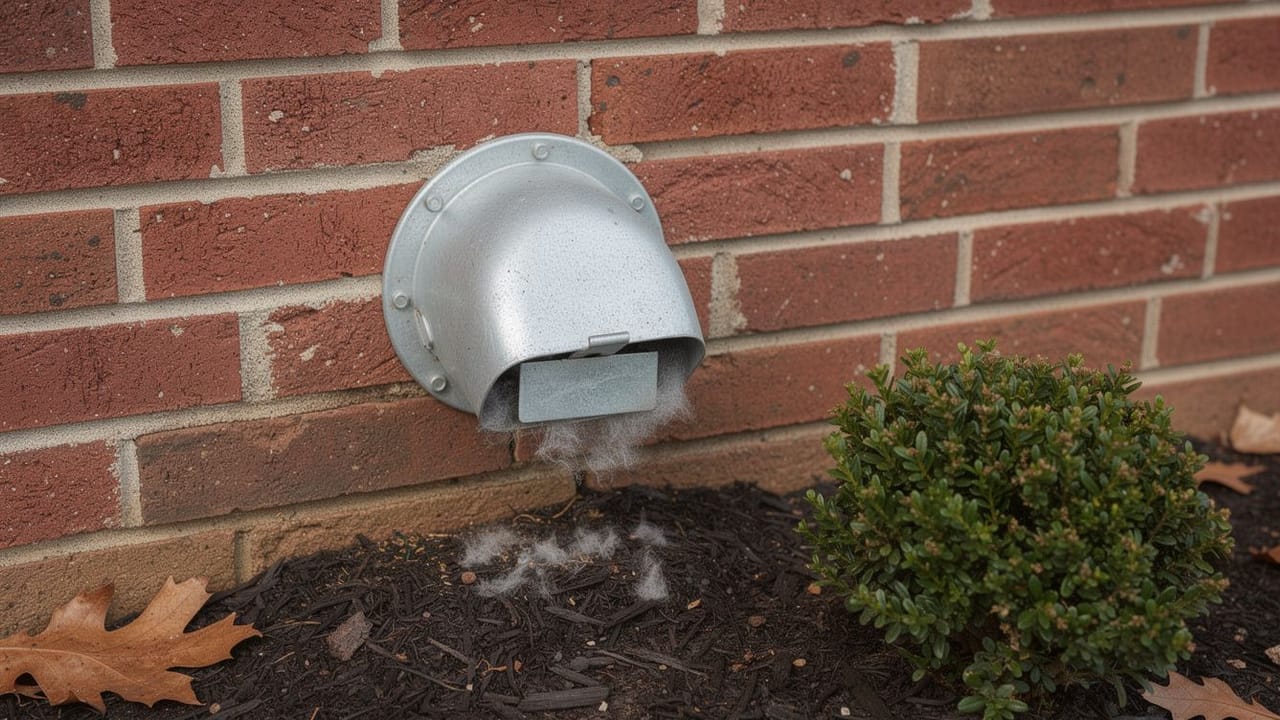
Outside, the duct should end at a fitting with a damper that closes when the dryer is off. The Building America guide calls for a gravity or automatic damper with no screen on the end, set at least 3 feet from any opening in the building. USFA warns that wire screen or cloth over the opening collects lint, and that nests of small animals and insects can block it, so look at the hood now and then. Rodents find their way into other parts of a house’s air system too, which our post on mice in the ductwork goes into.
How often
At least once a year, which is the interval the Building America guide gives for having a professional clean the exhaust duct. CPSC says to clean the vent and duct periodically, and USFA says especially when clothes are taking longer than normal to dry. We’d look sooner in a house that runs the dryer every day or has a long run with several bends, since USFA ties those runs to lint sticking inside the duct, but we know of no published interval for that, so let drying time be your gauge. The same guide advises against ending the duct at the roof at all, so if yours does, ask about it when you call.
A gas dryer adds one more item: USFA advises a yearly professional inspection to make sure the gas line and connection are intact and free of leaks. When the duct itself needs clearing, ask us for a free estimate.
Sources
- U.S. Fire Administration, Clothes Dryer Fires in Residential Buildings (2008-2010), Topical Fire Report Series Vol. 13 Issue 7 (2012) — About 2,900 residential dryer fires a year; failure to clean the leading factor at 34 percent; hotter clothes as a sign; outdoor covering should open; long or bent runs condense moisture and attract lint; codes require outdoor exhaust, ban attics and crawl spaces, cap the duct at 35 feet, transition ducts to eight feet; foil a poor choice; mold from indoor venting; no screens; animal nests; check behind the dryer; yearly gas inspection
- U.S. Consumer Product Safety Commission, Overheated Clothes Dryers Can Cause Fires (Publication 5022, 2012) — Damp clothes or longer drying as a sign of a blocked screen or duct; check exhaust at the outside vent; clean the lint screen every load and the duct periodically; plastic or foil duct traps lint and kinks or crushes; use rigid or semi-rigid metal
- U.S. Department of Energy, Weatherization Installer Job Aid 17-1: Vent a Clothes Dryer (2024) — Long runs or excessive bends create a fire hazard and increase dry time; foil and plastic duct not allowed; duct to the exterior; termination with a backdraft damper and no screen
- DOE/PNNL Building America Solution Center, Proper Clothes Dryer Venting (2022) — About a gallon of water per load; moisture damage from venting into a building cavity; spiral duct traps lint; smooth galvanized steel or aluminum; 2.5 feet off per 45-degree bend and 5 feet per 90; terminate outside at least 3 feet from openings; damper, no screen; avoid roof termination; professional cleaning at least once a year
- DOE/PNNL Building America Solution Center, Clean Dryer Exhaust (2025) — Cleaning the duct annually makes clothes dry faster, saves energy and could prevent a fire
FAQ
The Dryer Vent Is the One That Matters — questions
How often should a dryer vent be cleaned?
At least once a year, which is what the Building America Solution Center recommends, and sooner if drying slows down. CPSC says clothes still damp after a normal cycle, or drying that takes longer than normal, can mean the lint screen or the duct is blocked. Clean the screen first. If drying stays slow, the duct is the likely cause, and clearing it makes clothes dry faster and saves energy.
Is flexible foil dryer duct acceptable?
No. CPSC says to replace plastic or foil accordion-type duct with rigid or semi-rigid metal, because the flexible kind traps lint more easily and kinks or crushes, and a DOE weatherization job aid lists foil as not allowed. Use smooth-walled metal for the run. The short connector from the dryer to the wall should be a listed flexible transition duct, which USFA says codes limit to eight feet and keep out of walls and ceilings. Plastic duct should not be used at all.
Can a dryer vent into the crawl space?
No. USFA says building codes require dryers to exhaust directly to the outdoors and expressly prohibit venting into crawl spaces, attics, soffits or ridge vents. A dryer puts out about a gallon of water per typical load, carrying lint with it, and in a crawl space that moisture can lead to mold and damage. The duct should end outside the house at a fitting with a damper that closes and no screen over it.
Is dryer vent cleaning worth it?
Yes. In the U.S. Fire Administration’s figures for 2008 to 2010, failure to clean was the leading factor in residential dryer fires, at 34 percent. The Building America Solution Center adds that cleaning the duct every year makes clothes dry faster and saves energy. Clean the lint screen after every load as well.