
· by Michael Blair, Nashville's Air Duct Cleaning
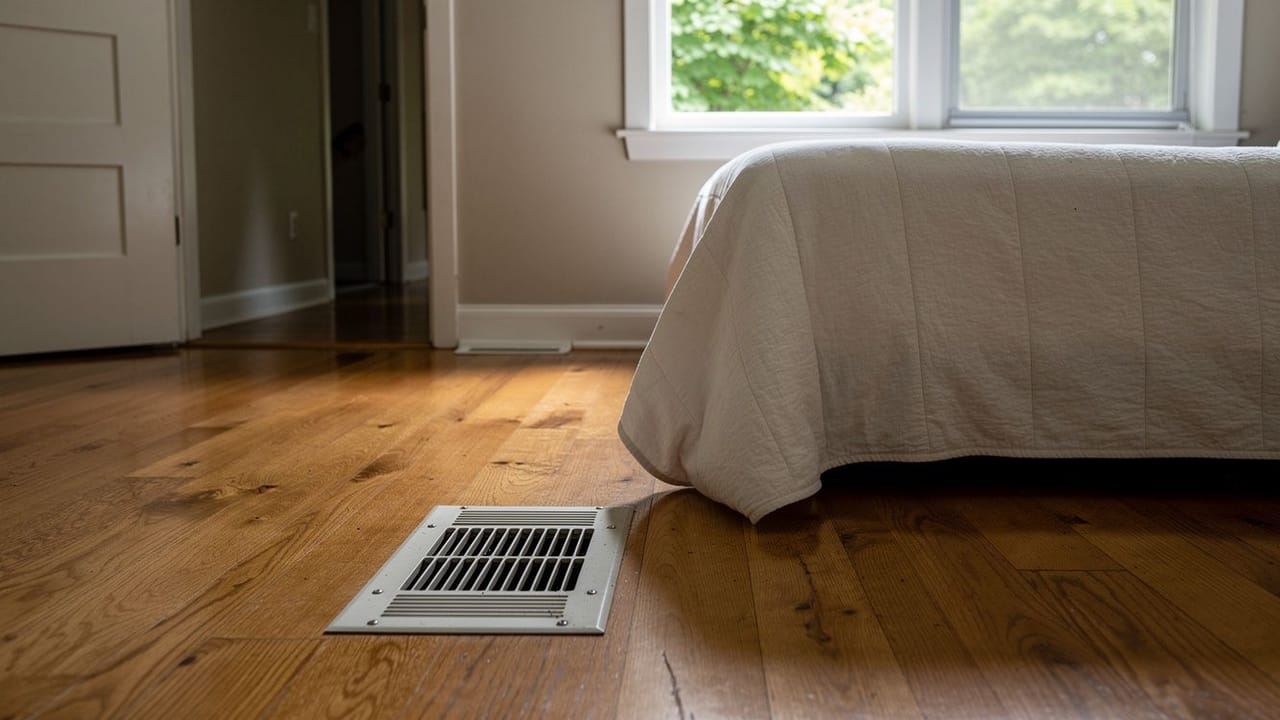
The logic seems sound: close the registers in rooms nobody uses and the conditioned air goes to the rooms people are in, with less to heat or cool overall. A forced-air system does not work that way. The ducts are laid out to deliver air through every register, and when some of them close, the blower meets more resistance and the pressure inside the ducts goes up. The air meant for the spare room does not neatly reroute itself to the kitchen.
Where the air actually goes
With fewer ways out, the supply side of the system runs at a higher pressure. Some of that air does reach the open registers, and more of it escapes through leaks the ducts already had. Those leaks are rarely small to begin with: ENERGY STAR’s guidance on duct sealing says that in a typical house about 20 to 30 percent of the air moving through the ducts never reaches a room, lost to leaks, holes and poorly connected sections. The same page counts ducts running through an attic, crawl space or garage as a warning sign, and in a house built that way the air you paid to condition leaks into those spaces.
The most useful study of register closing we know of is a Lawrence Berkeley National Laboratory report on register closing in forced-air systems, which measured how duct leakage changed as registers were shut and then modeled what that did to energy use. For California houses with the ducts outside the living space, closing registers raised energy use across a wide range of climates, leakage levels and numbers of closed registers, because the saving from conditioning less of the house was offset by bigger duct losses, mostly leakage. Closing registers near the air handler pushed up pressure and leakage across the whole system; the penalty was smallest when the closed ones were the farthest away, since that mostly affected a single branch. The report dates from 2003 and modeled California homes, and we have not seen a study like it done in Tennessee. For more on where duct air escapes and what it costs, read why leaky ducts cost more than dirty ones.
What does closing vents do to the equipment?
More resistance in the ducts means less air moving across the cooling coil and through the furnace. In summer the coil is where it shows. Trane’s page on frozen evaporator coils names restricted airflow as the biggest reason a coil freezes, and says the first sign may be an air conditioner that is running while it blows warm air instead of cold. Ice on the coil or its cabinet, frozen refrigerant lines at the outdoor unit and water on the floor as it thaws are the other signs it describes. A dirty coil is on the same list of causes, and cleaning one is part of our coil and blower cleaning.
The LBNL report puts a number on where register closing turns into a safety problem. It advises against closing more than 60 percent of the registers, because past that point the added resistance severely restricts airflow through the system: furnaces may end up operating on the high-limit switch, and air conditioners may freeze their coils. Short of that line the energy penalty from extra leakage still applies, since the study found it across a wide range of how many registers were closed.
- Frozen evaporator coil in summer
- Furnace running on the high-limit switch in winter
- More duct leakage into the attic or crawl space
- More energy used overall, the opposite of the plan
What happens to the room you shut off?
Shutting the register and the door takes a room out of the system that keeps the house dry as well as cool. EPA’s brief guide to mold, moisture and your home lists air conditioners and dehumidifiers among the ways to keep indoor humidity below 60 percent, ideally between 30 and 50, because mold needs moisture to grow. A room cut off from conditioned air through a humid Middle Tennessee summer goes without that help, and among the places EPA says mold hides is the surface of a wall behind furniture, where condensation forms.
Winter brings the other half of it. A room on an outside wall that gets little heat has colder walls and window glass, and EPA treats condensation on windows, walls or pipes as a sign of high humidity to dry up quickly. Its advice for preventing condensation includes more air movement, by opening doors where practical, which is the reverse of a shut door over a shut register. Keeping some conditioned air reaching every room is the simplest way we know to keep the whole house even.
What works instead
When one room is always too warm or too cold, the cause is often in the ducts that feed it. ENERGY STAR lists rooms that are hard to heat and cool, stuffy rooms that never feel comfortable, and tangled or kinked flexible duct among the signs of a poorly performing system. Those are what we look for when we have the system open for air duct cleaning, and a crushed or disconnected run is worth finding before anyone touches a register. Changing how the air is divided between rooms, or zoning a part of the house that is used differently, is design work for an HVAC contractor and worth asking one about before you start closing registers by hand. If you only want to shut one or two, the LBNL finding is to start with the registers farthest from the air handler.
For the energy bill, ENERGY STAR’s advice is to seal duct leaks with mastic sealant or metal tape, never duct tape because it does not last, and to insulate the ducts you can reach in attics, crawl spaces, unfinished basements and garages. Register closing is not among its recommendations. If there is a room in your house that never feels right and you want someone to look at the ducts serving it, ask us for a free estimate.
Sources
- Lawrence Berkeley National Laboratory, I. S. Walker, Register Closing Effects on Forced Air Heating System Performance (LBNL-54005, 2003) — Closing registers raised energy use in modeled California houses with ducts outside conditioned space; savings offset by duct leakage; closing near the air handler raises whole-system pressure and leakage; penalty smallest when the farthest registers are closed; more than 60 percent closed restricts airflow, furnaces on the high-limit switch, frozen coils
- ENERGY STAR, Duct Sealing — About 20 to 30 percent of duct air lost in a typical house; ducts in an attic, crawl space or garage and hard-to-condition rooms as signs of poor ducts; seal with mastic or metal tape, never duct tape; insulate accessible ducts
- US EPA, A Brief Guide to Mold, Moisture and Your Home — Keep indoor humidity below 60 percent, ideally 30 to 50, using air conditioners or dehumidifiers; condensation as a sign of high humidity; more air movement by opening doors; mold behind furniture where condensation forms
- Trane, What To Do If the AC Evaporator Coil Is Frozen — Restricted airflow is the biggest reason a coil freezes; warm air from a running AC as the first sign; dirty coil among the causes
FAQ
Why Closing Vents in Unused Rooms Backfires — questions
Does closing vents in unused rooms save money?
Usually not when the ducts run through an attic or crawl space. A Lawrence Berkeley National Laboratory study of California houses with ducts outside the living space found that closing registers raised energy use, because the saving from conditioning less of the house was offset by extra duct leakage. If you do close one, the study found the penalty smallest when the closed registers were the ones farthest from the air handler.
Can closing air vents damage my HVAC system?
It can if you close too many. The same study advises against closing more than 60 percent of the registers, because the added resistance severely restricts airflow; furnaces may then run on the high-limit switch and air conditioners may freeze their coils. Closing fewer than that keeps you under the safety line the study drew, though it still found an energy penalty from the extra leakage.
How do I stop heating and cooling a room I never use?
The registers alone will not do it well. The changes that hold up are the ones ENERGY STAR recommends for the whole system, sealing and insulating the ducts, and for a part of the house used very differently an HVAC contractor can tell you whether zoning or a separate system makes sense. For a single spare room, we would leave the register open, or close only one far from the air handler, and avoid sealing the room off with a shut door.
Should I close vents in unused rooms in winter?
Usually not. A room on an outside wall that gets little heat ends up with colder walls and window glass, and the EPA treats condensation on them as a sign of high humidity to dry up quickly. Close too many registers and a furnace may run on its high-limit switch, with extra duct leakage on top.