· by Michael Blair, Nashville's Air Duct Cleaning
The EPA’s introduction to indoor air quality names indoor sources that give off gases or particles as the primary cause of indoor air problems, so the first job is finding those and getting rid of what you can. After that, three things help, and each one does a different job: filtration catches particles, humidity control keeps moisture down, and ventilation brings in outdoor air to dilute what the house produces. In the houses we see around Nashville, humidity is the one people get to last, and it is usually where our air quality testing conversations end up.
Filtration
A better filter helps, up to what the system can push air through. The EPA’s guide to air cleaners in the home suggests a filter rated at least MERV 13, or as high a rating as your system fan and filter slot can accommodate, and says an HVAC technician can help work out where that limit is. Depth is part of the same question: the guide notes that filters commonly come 1 to 5 inches thick, and whether a deeper media cabinet suits your air handler is something we check on the visit rather than assume. Our post on choosing an HVAC filter goes further into that tradeoff.
The rating means little if the filter does not seal. The same EPA guide asks you to make sure it fits snugly, so air does not leak around it and you do not have to bend or crush it to get it in, and it says manufacturers typically recommend a new one every 60 to 90 days, sooner if the old one comes out heavily soiled. A gray line along the cardboard edge of a used filter is the mark we look for, because it shows where air was slipping past.
What humidity should a house be kept at?
The EPA’s brief guide to mold, moisture and your home says to keep indoor relative humidity below 60 percent, and ideally between 30 and 50. Dust mites are one reason to stay toward the low end; a review of allergy control in American Family Physician says that keeping a house below 50 percent greatly suppresses their growth. Summers here are humid, and the only way to know where your own house sits is to measure it. The EPA describes a humidity meter as a small, inexpensive instrument, about $10 to $50 at many hardware stores.
The same EPA guide lists air conditioners and dehumidifiers as the tools to use when needed. If the meter stays high while the air conditioning is running, a dehumidifier is the next thing to look at, either a portable one in the worst room or a whole-house unit tied into the ductwork. Which one makes sense depends on the house, and we would rather see a few days of readings before anyone buys either.
- A filter rated MERV 13, or as high as the fan and filter slot can take
- A filter that fits its track snugly, with no gaps at the edges
- Relative humidity between 30 and 50 percent, and never above 60
- A sealed, dehumidified crawl space
- Bathroom and kitchen exhaust that ends outdoors, not in the attic
The crawl space again
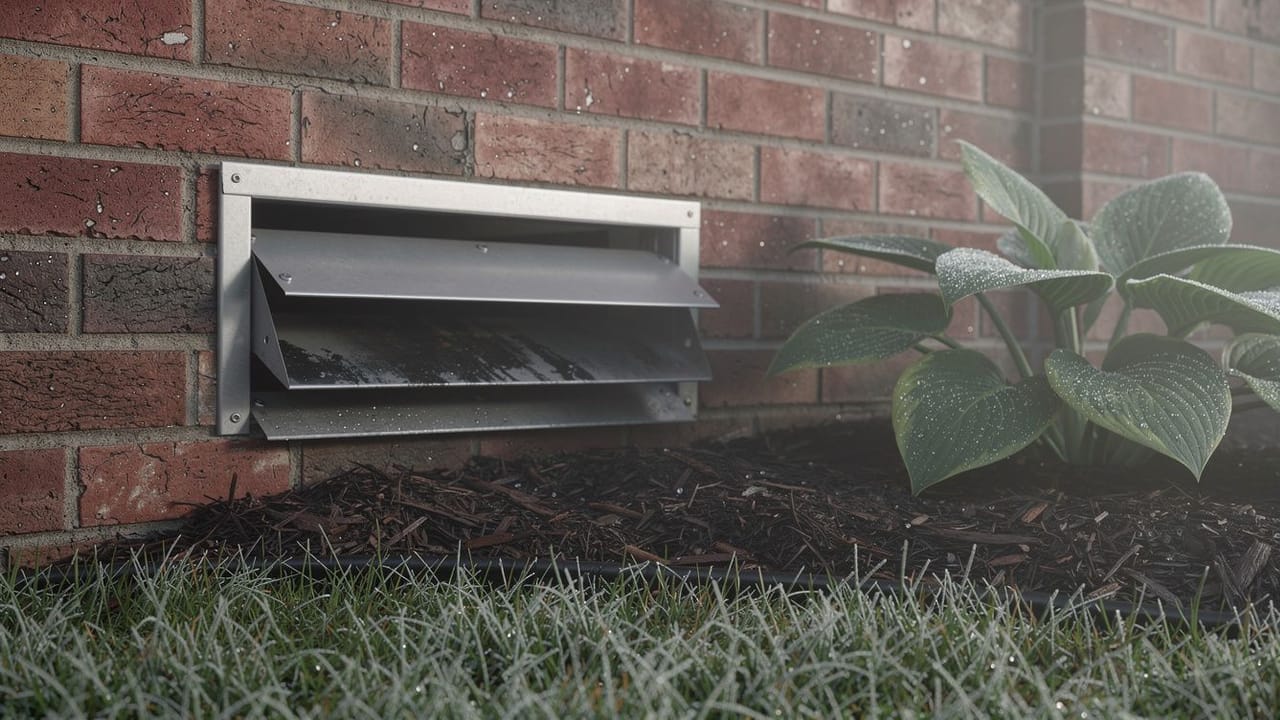
Crawl space vents were meant to let outside air carry moisture away. The Department of Energy’s Building America profile of unvented, conditioned crawlspaces explains why that backfires in humid climates: the outside air is often wetter than the air already in the crawl space, which leads to structural, mold and pest problems. Some of the air under a house can reach the rooms above it, so we treat a damp crawl as part of the indoor air question, not a separate one.
The same 2014 DOE profile reports that Building America research on unvented crawlspaces showed heating and cooling savings of 15 to 18 percent while cutting humidity by more than 20 percent, and that those results influenced the 2009 and 2012 International Residential Code provisions allowing unvented, conditioned crawlspaces. Sealing and drying a crawl space is a much bigger job than changing a filter, so when an inspection turns up a wet one, we say so plainly instead of letting a cleaning stand in for it.
Does a tight house need fresh air brought in?
Tighter houses need fresh air on purpose. The EPA’s introduction to indoor air quality says that, unless buildings have special mechanical ventilation, those built to keep outdoor air from leaking in and out may have higher indoor pollutant levels. Older, leakier houses get outdoor air through their gaps whether anyone planned it or not. Either way, the exhaust fans in the bathrooms and the kitchen have to end outside.
The Building America Solution Center’s guide to bathroom exhaust fans says to install the fan to vent outdoors, not into an attic, crawlspace or the space between floors. A fan that ends in the attic just moves the shower’s moisture into another part of the house, so when we are up there for the ductwork we follow the fan duct to see where it stops. For the kitchen, the EPA mold guide says to use exhaust fans or open windows whenever cooking. If you would like the filter, the humidity and the crawl space looked at in one visit, ask us for an estimate.
Sources
- U.S. EPA, Introduction to Indoor Air Quality — Indoor sources are the primary cause of indoor air problems; inadequate ventilation raises pollutant levels; tight buildings without mechanical ventilation may have higher levels
- U.S. EPA, Guide to Air Cleaners in the Home — At least MERV 13 or as high as the fan and slot allow; filters 1 to 5 inches thick; snug fit; replacement every 60 to 90 days; portable cleaners filter one room, often with HEPA
- U.S. EPA, A Brief Guide to Mold, Moisture, and Your Home — Keep humidity below 60 percent, ideally 30 to 50; humidity meters cost about $10 to $50; use air conditioners and dehumidifiers; exhaust fans when cooking
- American Family Physician, Environmental Control of Allergic Diseases (2002) — Humidity below 50 percent greatly suppresses dust mites; HEPA filters are not effective at removing dust mite allergen
- U.S. DOE, Unvented, Conditioned Crawlspaces: Building America Top Innovation (2014) — Vented crawls in humid climates take in wetter air; unvented crawls saved 15 to 18 percent on heating and cooling and cut humidity over 20 percent; IRC 2009 and 2012 changes
- Building America Solution Center (PNNL), Bathroom Exhaust Fans — Vent bathroom fans outdoors, not into an attic, crawlspace or the space between floors
FAQ
Improving Indoor Air in a Nashville House — questions
What is the best air filter for a home?
The EPA suggests at least a MERV 13, or the highest rating your system fan and filter slot can accommodate, and an HVAC technician can tell you where that limit is for your equipment. Just as important is a snug fit in its track, because air that leaks around the edges never passes through the filter at all.
Do air purifiers help?
A portable air cleaner sized for the room, often one with a HEPA filter, can reduce particles in that one room, which can help a bedroom. It filters air, not moisture, so it does nothing for humidity, and it treats one room rather than the whole house. An allergy review in American Family Physician also notes that HEPA filters do little for dust mite allergen, because the particles carrying it stay airborne only briefly. The EPA puts removing pollution sources first.
What is the biggest indoor air quality issue in Nashville homes?
It depends on the house; the EPA names indoor sources of gases and particles as the primary cause of indoor air problems in general. In the houses we see, humidity gets a hard look, because summers here are humid and the EPA advises keeping indoor humidity below 60 percent, ideally 30 to 50. A vented crawl space is one of the first places we check, since the DOE notes that in humid climates the outside air coming through the vents is often wetter than the crawl space air.
How can I check my indoor air quality?
Start with a humidity meter, which the EPA says costs about $10 to $50 at many hardware stores, and aim for a reading between 30 and 50 percent. Then pull the furnace filter and look for a gray line along its edge, a sign air is slipping past, and confirm the bath fans vent outdoors.